Switzerland packs an astonishing amount of scenery into a small country: snow-capped peaks, glacier-fed lakes, waterfalls, green valleys and storybook villages. It also has one of the best public transport systems in the world, which makes exploring the Alps easy even without a car. Switzerland is famously expensive, but careful planning can help you get the most from your budget.
When to Visit Switzerland
- June to September: the best time for hiking, lake swims and mountain excursions. July and August are the busiest months.
- Late September to October: golden autumn colors and fewer visitors, although some mountain lifts begin seasonal maintenance.
- December to March: ski season and snowy villages, plus festive Christmas markets in cities like Basel and Montreux.
- April to May and November: shoulder seasons with lower prices, but some high-altitude attractions may be closed.
Top Destinations in the Swiss Alps
Interlaken and the Jungfrau Region
Set between Lake Thun and Lake Brienz, Interlaken is the gateway to the Jungfrau region and a hub for adventure activities such as paragliding and canyoning. From here, trains and cable cars reach:
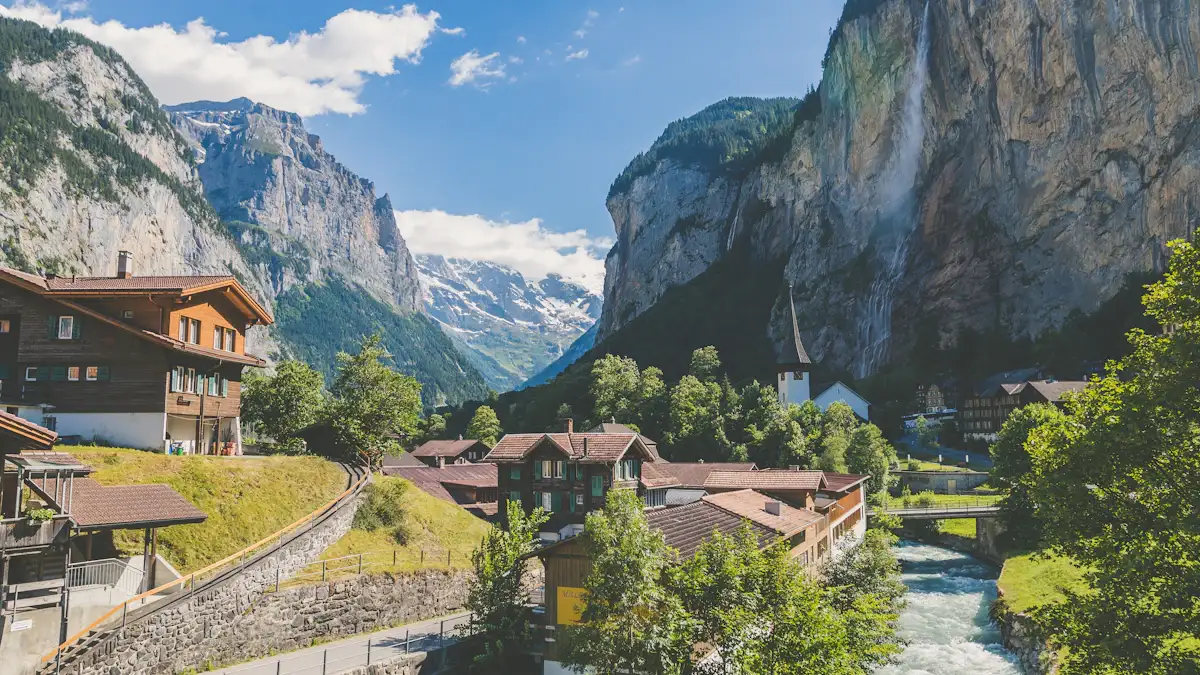
- Lauterbrunnen: a dramatic valley with 72 waterfalls, including Staubbach Falls.
- Grindelwald: a mountain village beneath the north face of the Eiger.
- Wengen and Mürren: car-free villages with breathtaking views.
- Jungfraujoch: known as the "Top of Europe," with a high-altitude railway station, glacier views and snow year-round.
Zermatt and the Matterhorn
The car-free village of Zermatt sits at the foot of the iconic Matterhorn. Take the Gornergrat railway for spectacular panoramic views, or ride the cable car to the Matterhorn Glacier Paradise. Zermatt is a top destination for both summer hiking and winter skiing.
Lucerne
Lucerne combines a charming old town and the famous Chapel Bridge with easy access to mountains such as Mount Pilatus and Mount Rigi. A lake cruise is a relaxing way to enjoy the scenery.
Lake Geneva Region
In French-speaking Switzerland, visit the lakeside Château de Chillon near Montreux and walk through the terraced vineyards of Lavaux, a UNESCO World Heritage Site.
Scenic Train Journeys
Switzerland's panoramic trains are attractions in their own right:
- Glacier Express: an all-day journey between Zermatt and St. Moritz across bridges and through tunnels.
- Bernina Express: from Chur or St. Moritz to Tirano in Italy, crossing high alpine passes.
- GoldenPass Line: connecting Montreux, Interlaken and Lucerne through lakes and mountains.
These trains require seat reservations, which should be booked well in advance in summer. For more on rail travel, see our Europe by train guide.
Getting Around: The Swiss Travel Pass
The Swiss Travel Pass covers unlimited travel on most trains, buses and boats for consecutive days, and includes free entry to hundreds of museums. It also gives a discount on many mountain railways and cable cars, including popular excursions in the Jungfrau region.
Alternatively, the Half Fare Card gives 50 percent off most public transport for a month and can be cheaper if you are staying in one area and taking fewer long journeys. Compare your planned routes with both options before buying.
Where to Stay
- Interlaken: central, practical and with the widest range of accommodation.
- Lauterbrunnen or Wengen: for waking up to mountain and waterfall views.
- Grindelwald: for hikers and families.
- Lucerne: for city comforts with easy day trips.
Mountain hotels book up quickly in summer. Compare prices on SkylineSparrow hotels.
How to Save Money in Switzerland
- Stay in a room with a kitchenette and shop at supermarkets like Coop and Migros.
- Drink from public fountains, where the water is clean and free.
- Check the weather before paying for high-altitude excursions, since cloudy days can hide the views.
- Many hotels provide a free local guest card with discounted or free public transport.
- Hike: the best views in Switzerland are often free.
Practical Information
- Currency: Swiss franc (CHF). Cards are widely accepted.
- Languages: German, French, Italian and Romansh, with English commonly spoken in tourist areas.
- Entry: Switzerland is part of the Schengen Area, though not the EU. See our Schengen and ETIAS guide.
- Main airports: Zurich and Geneva, both with direct train connections.
Frequently Asked Questions
How many days do you need in Switzerland?
Five to seven days allows time for the Jungfrau region, Lucerne and Zermatt. With less time, focus on one region.
Is the Swiss Travel Pass worth it?
It is usually worth it if you are traveling between several regions and visiting museums. For a stay based in one place, the Half Fare Card may be cheaper.
Can I visit Switzerland without a car?
Yes. Trains, buses, boats and cable cars reach almost every destination, and some of the most popular villages are car-free.
Plan Your Alpine Adventure
Switzerland's mountains, lakes and scenic railways create memories that last a lifetime. Compare flights to Zurich and Geneva on SkylineSparrow and start planning your trip to the Swiss Alps.